
Fact in Fiction
The alchemy of combing the real and the imagined to build a story

In Our (litigious) Time
At every book event I’m asked some form of ‘Did this really happen?’ Readers want to know if the story is based on actual events. The knowledge that real people went through the events in a work of fiction can lend weight and subtext to a story – it may also distract from the reader’s experience.
“Fiction does its work by creating a dream in the reader’s mind”
John Gardner, The Art of Fiction
The art of fiction lies in blurring the lines between the real and the imagined to create a believable world filled with compelling characters that drive the plot. The writer’s challenge is to hide the lines and avoid dream-breaking reactions such as ‘they’d never say that!’ In the case of fiction based on actual events, that challenge becomes more difficult. The reader may invest more in looking for the lines between fiction and reality than in the story itself – they may even look for themselves.
In his early novels Ernest Hemingway developed a reputation for thinly disguising friends, places and events, most famously in The Sun Also Rises. To this day scholars make careers out of connecting the characters in the novel to his adventurous circle of friends. ‘Papa’ apparently grew tired of dealing with this distraction. Twenty-four years after publishing The Sun Also Rises, he added this ‘Note’ before Chapter 1 of his 1950 novel Across the River and Into the Trees:
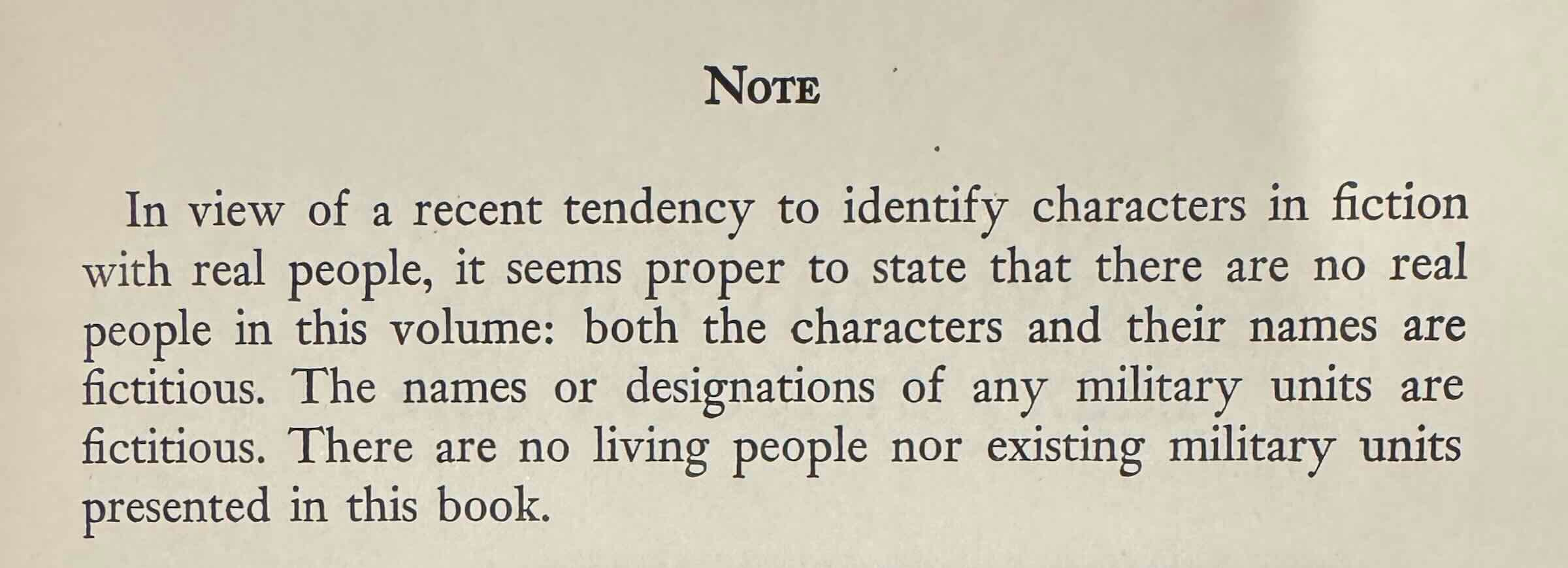
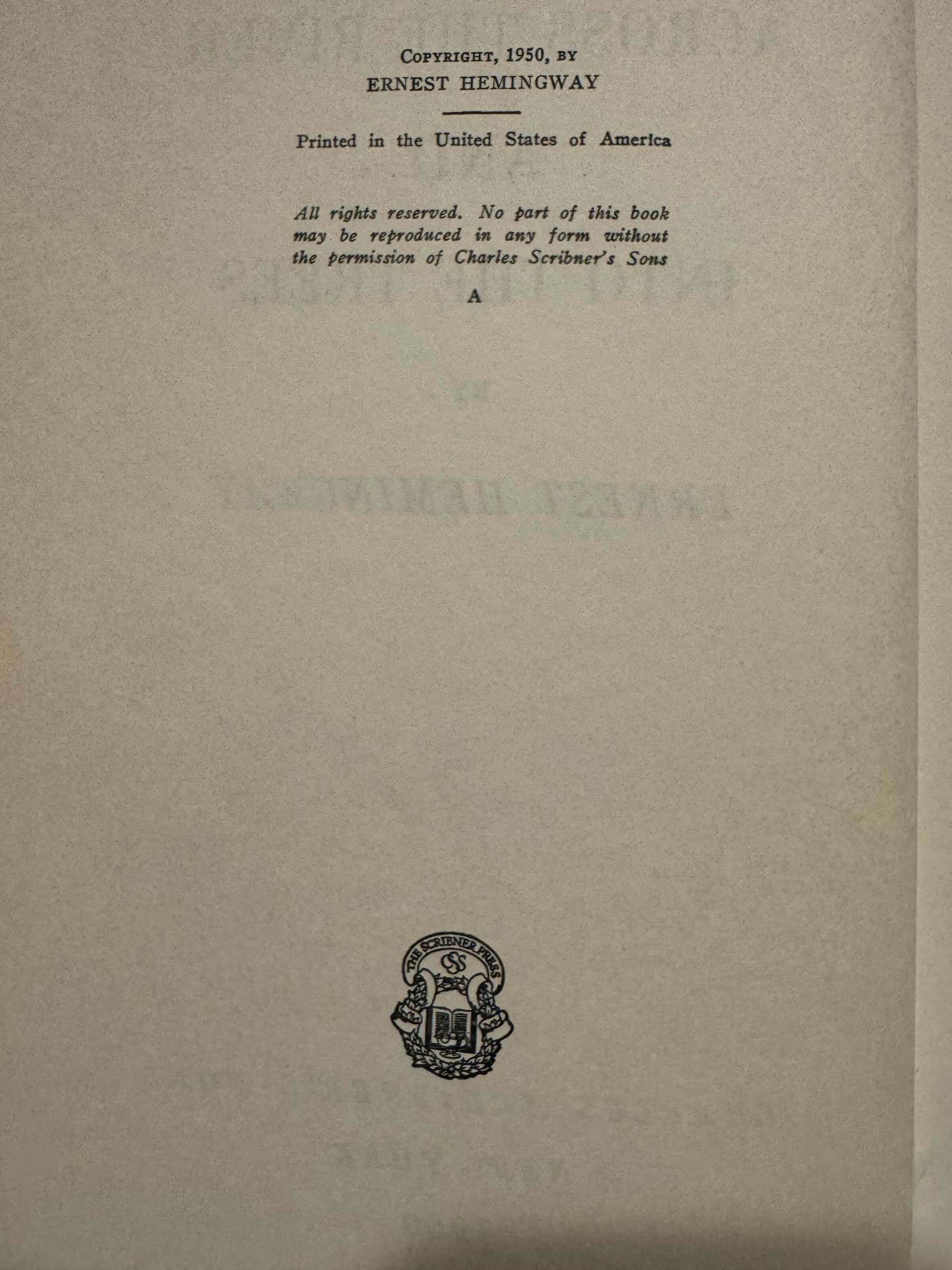
In the first edition of Across the River and Into the Trees there is no disclaimer that the characters, settings, plot, and dialogue were fictitious or used fictitiously.
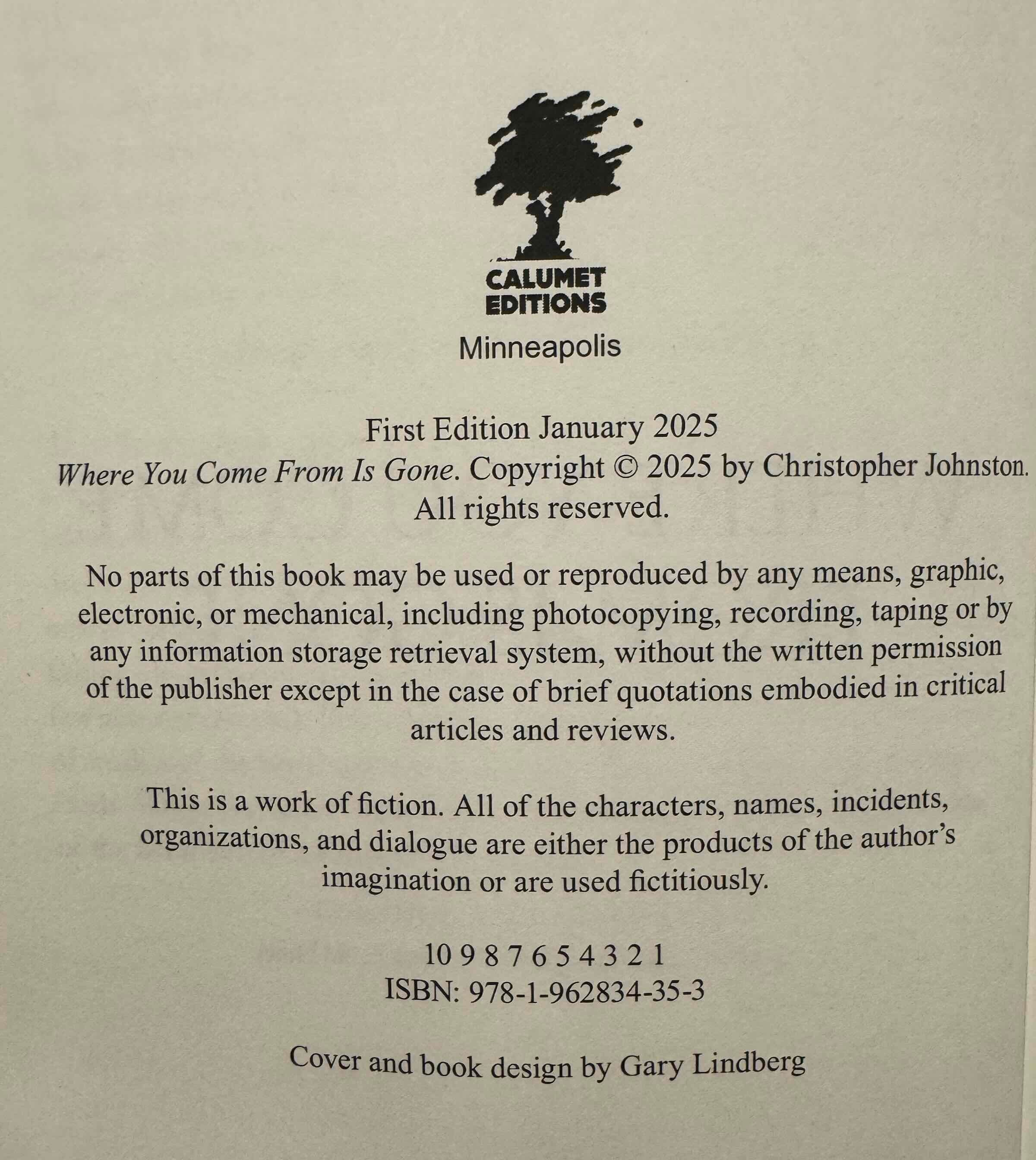
Today, all works of fiction contain some form of disclaimer, such as:
The Thin Disguise
Hemingway was not unique in the practice of the thin disguise. Sinclair Lewis employed it in Main Street, in which his fictional town of Gopher Prairie is based on Sauk Center, Minnesota. F. Scott Fitzgerald does it in The Great Gatsby, where the fictional East and West Egg on Long Island are based on Great Neck and Port Washington, New York. The technique is not confined to long-dead, male writers. Jane Smiley (Zebulon, Iowa in A Thousand Acres), Annie Proulx (Brokeback Mountain, Wyoming in Brokeback Mountain) and Elizabeth Strout (Crosby, Maine in Olive Kitteridge) have used it too.
Every writer approaches it differently. How they do it forms an integral part of their style. Keep in mind that there is only one rule in the alchemy of the real and imagined in fiction – it must hold the reader’s attention through action or emotion.
“It’s like the seed is truth, and you put it in a little fictional dirt, and then you see the rise of it.”
Danez Smith, Mpls St. Paul magazine interview
Character Is Destiny
Compelling characters drive great fiction, regardless of genre. Jay Gatsby, MacBeth, Katniss Everdeen, Captain Ahab, and Jack Ryan - all these characters are connected closely enough with the world we live in to be believable. They also have at least one distinguishing characteristic that holds the reader’s interest.
In the case of Captain Ahab in Moby Dick, Herman Melville used his experience as a seaman to create the one-legged captain obsessed with killing the white whale in revenge for biting off his leg. He used traits from men he encountered on the ships he sailed on, characters from works of fiction, and men he heard about in second-hand whaling stories. Melville took certain character traits; obsession, leadership, mania, and a deranged sense of justice, to assemble one of the most iconic characters in literature. Captain Ahab holds an iconic place in literature not solely for his traits. It’s due to how his traits fit the setting and propel the plot. Put Captain Ahab by himself on a camel in the desert searching for a white snake that bit him, and the novel doesn’t work.
“A novelist is a person who lives in other people’s skins.”
E. L. Doctorow
It is essential to choose traits that interact with the setting and the other characters, and that interaction drives the plot. Take someone you know as a base. Add in a high school friend’s obsession with cars. Give them a bad haircut their parents forced on them. Bless them with a talent for running and a hatred of athletics. Conflicting characteristics support a complex character. Saddle them with traits that will create emotional conflict and hold the reader’s interest. Try different blends of traits until the character feels real yet distinctive from the base character. When the character feels real, drop them into the setting.

Location, Location, Location
A distinctive location shapes a character’s development. A great setting gives the characters something to react to or fight against rather than serve as a simple backdrop. It can force the character to confront their inner conflicts. The sea and the whale in Moby Dick force Captain Ahab to deal with his anger at God and nature. Carol Milford, college graduate from Chicago, clashes with the local authorities in Main Street when she tries to improve and enliven the small town of Gopher Prairie, Minnesota, forcing her to confront the limits imposed on her ambition by the rural setting.
The best settings become another ‘character’ which influences the characters’ behavior, creating a virtuous cycle of character and setting interaction that reveals the characters’ best and worst traits. Select a real town or region as a base. Change the name to one that indicates the forces at work in the story. Layout the terrain, streets, and buildings in way that vexes the characters. Most importantly, give the reader enough information that they can find the approximate location on a map. Nestle it in among real places. This plants images and ideas in the reader’s mind. It allows the reader to visualize their own version of the setting without extensive description.
Plot: Did That Really Happen?
A person asked me at a recent reading what it was like to lose my leg, as that happens to one of the main characters in Chapter One of my recently published novel. I had to confess that I still had both my legs, and I had not suffered through the same accident as the character. The reader gave off an air of disappointment. A sense of wonder about what’s true and what’s not enhances the fictional dream. Knowing exactly what’s true and what’s not might kill it.
Fiction is the lie though which we tell the truth.
Albert Camus
A solid plot uses events from the author’s experience, news articles, and stories told by friends. Add to that history and local legends. Mix in character driven events from the writer’s imagination. The creative process involves taking real and imagined events and arranging them into a sequence which reveals and changes the characters. In the best books, the fictional events reveal truths about the world we live in.
It may sound as if all it takes to effectively blend fact in fiction is to collect the ingredients, stir vigorously, and bake at 3750 for one hour. The process is not formulaic (although it’s evident when the writer attempts to follow a formula). Hemingway wrote 47 endings to A Farewell to Arms before he got it right. It took five major revisions and hundreds of minor ones to satisfactorily blend fact in fiction in my debut novel.
It’s done through discipline and hard work, not inspiration or magic.
Christopher my man! Excellent. I read that one of the real life characters from The Sun Also Rises told everyone he was going to shoot Hemingway. Hem told people to make sure he had his address. Now that's guts.
The surgery to reattach your leg must have worked, ha! I had to laugh when I read what a reader asked you. Genre confusion is a larger cultural problem, isn't it?