
Un Duro Más
Learning slang in post-Franco Spain

It’s the end of July and ninety-five degrees on the Costa del Sol. Heat from the sand radiates up through my beach towel. I’m not sure which side is burning quicker, my chest exposed to the sun or my butt on the towel. My seventeen-year-old brother and I are in the last days of a four-week culture tour of Spain in 1978, lounging on the sand with the five ‘Wisconsin girls,’ a group from Hudson we met on the cramped charter flight from Minneapolis to Madrid (via Cleveland, with fuel stops in Gander Newfoundland, and London).
I’m fifteen and don’t know anything other than what I’ve learned in school, which means I don’t know anything about girls, money, or travel. I know enough to know that I don’t know anything practical but not enough to know what I don’t know. I also know that I can’t stop talking to one of the Wisconsin girls and our little group on the sweltering beach is sin aqua.
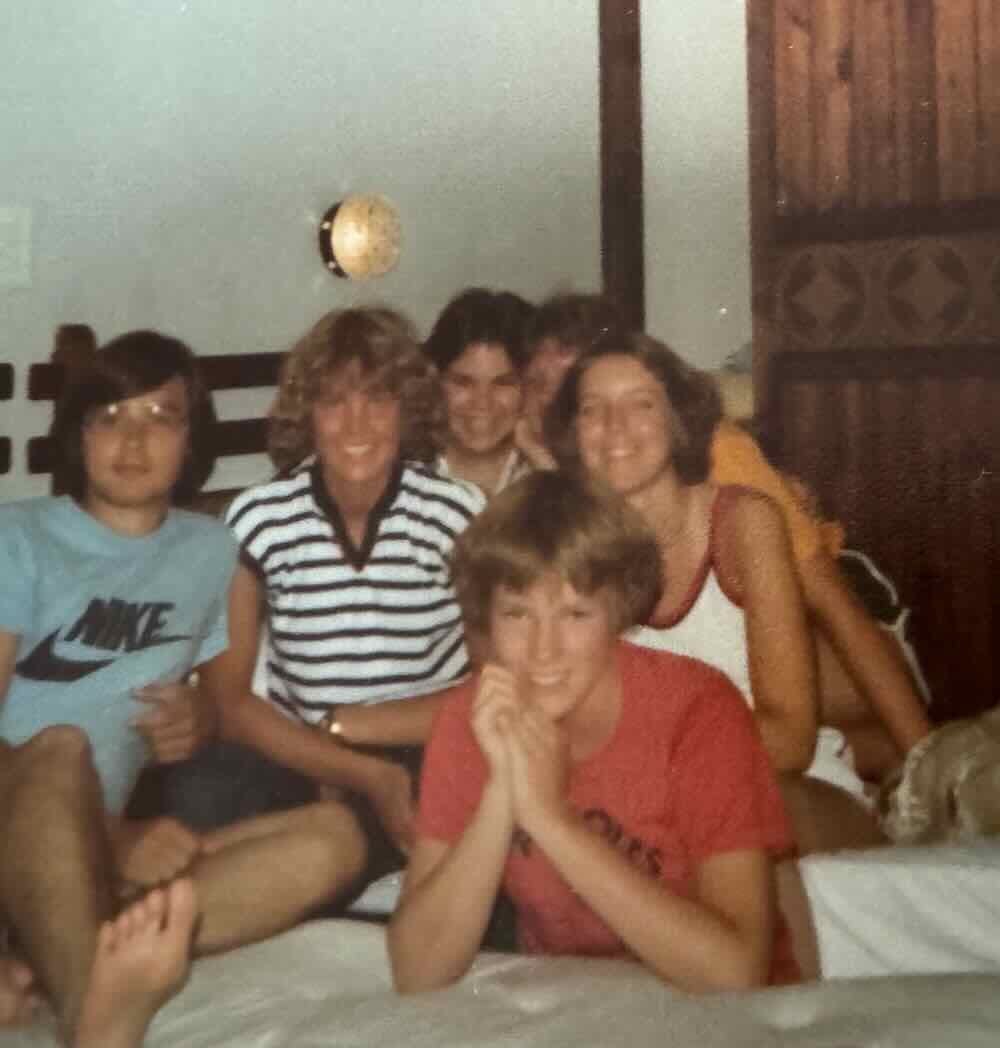
My brother and I should not have been there. We were practically stowaways.
At the end of sophomore year, my high school Spanish teacher told my brother and I about the tour. Señor S— worked as a guide on summer culture trips to Spain. He said the tour was booked, but the charter company might sell available seats on the flight at the last minute for as low as $50 or $100.
The catch? Once we got to Spain, we’d be on our own.
Get your passports and wait for my call, he said. If it happens, be ready to go on one- or two-days’ notice.
At the time, I expected my parents’ response to most any request, let alone a trip to Spain, would be an emphatic no. I got my first passport certain it would go unused. I prepared for a summer of playing baseball and forgot about Spain.
I was sitting on the bench between innings when my mom leaned around the corner of the dugout. Señor S— called, she said. There were seats on the flight for $100 each. Do you want to go?
We were batting. Gloves and hats strewn on the bench. Gray dust on the dugout floor marked with the tracks of metal cleats. Guys at the other end of the dugout chatting about what the pitcher had and pointing out cute girls in the stands. As a sophomore, I spent most of my time ‘riding the pine’ and hauling equipment bags. If I left the team, I’d not only be done for the season, but likely for good. Someone would take my place. My skills would deteriorate without practice until next spring. The one thing I’d wanted and worked for would likely be over.
I figured my parents would talk it over and say no.
Sure! I’d like to go, I said.
A day later, they said yes.
But, but, but…what about baseball? What about the money? How’d we get around on our own? I can’t speak Spanish that well. What about…
Señor S— said your language skills are good enough. All you have to do is start talking. We got you three hundred dollars in traveler’s cheques and Spain and Morocco on $10 and $15 a Day. You’re leaving the day after tomorrow.
Señor S— was a tough yet fun teacher. His expression of confidence in my ability startled me. The idea I could use the nouns I’d memorized and verbs I’d spent hours conjugating to actually communicate with people created a sense of possibility. It made me reconsider what I could do – maybe me and my brother could get by.
Dad took pictures of us outside the old Humphrey Charter Terminal at the Minneapolis airport. I stood there thinking he’s taking pictures in case the plane crashes, or we disappear in Spain.
We walked on the tarmac to the plane. No security, no lines. The flight attendant at the top of the boarding stairs rifled through my ticket booklet and tore out a carbon copy page. She asked if I had my passport. Like on the school bus, we could sit in any open seat.
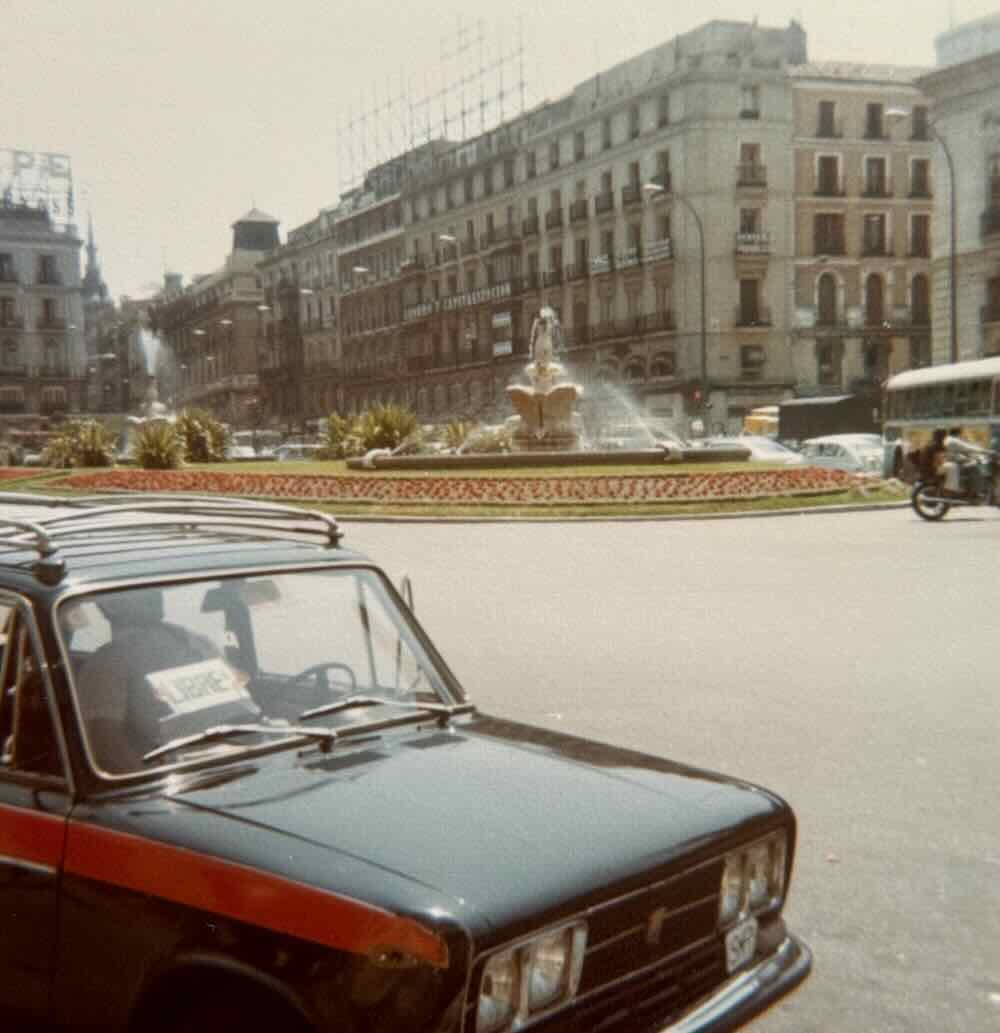
In Madrid, Señor S— gets us into the Prado with the tour group. He gets us a dorm room at the college where the tour is staying, even though we hadn’t paid for it. Breakfast is mouth ripping sourdough rolls with gazpacho. I don’t like it but eat it anyway – I have no choice. My brother and I wander around Retiro Park. We spend an afternoon sitting at a café in Plaza Mayor. I can’t believe people live at such a leisurely pace, enjoying themselves. Everyone takes a nap in the middle of the day!
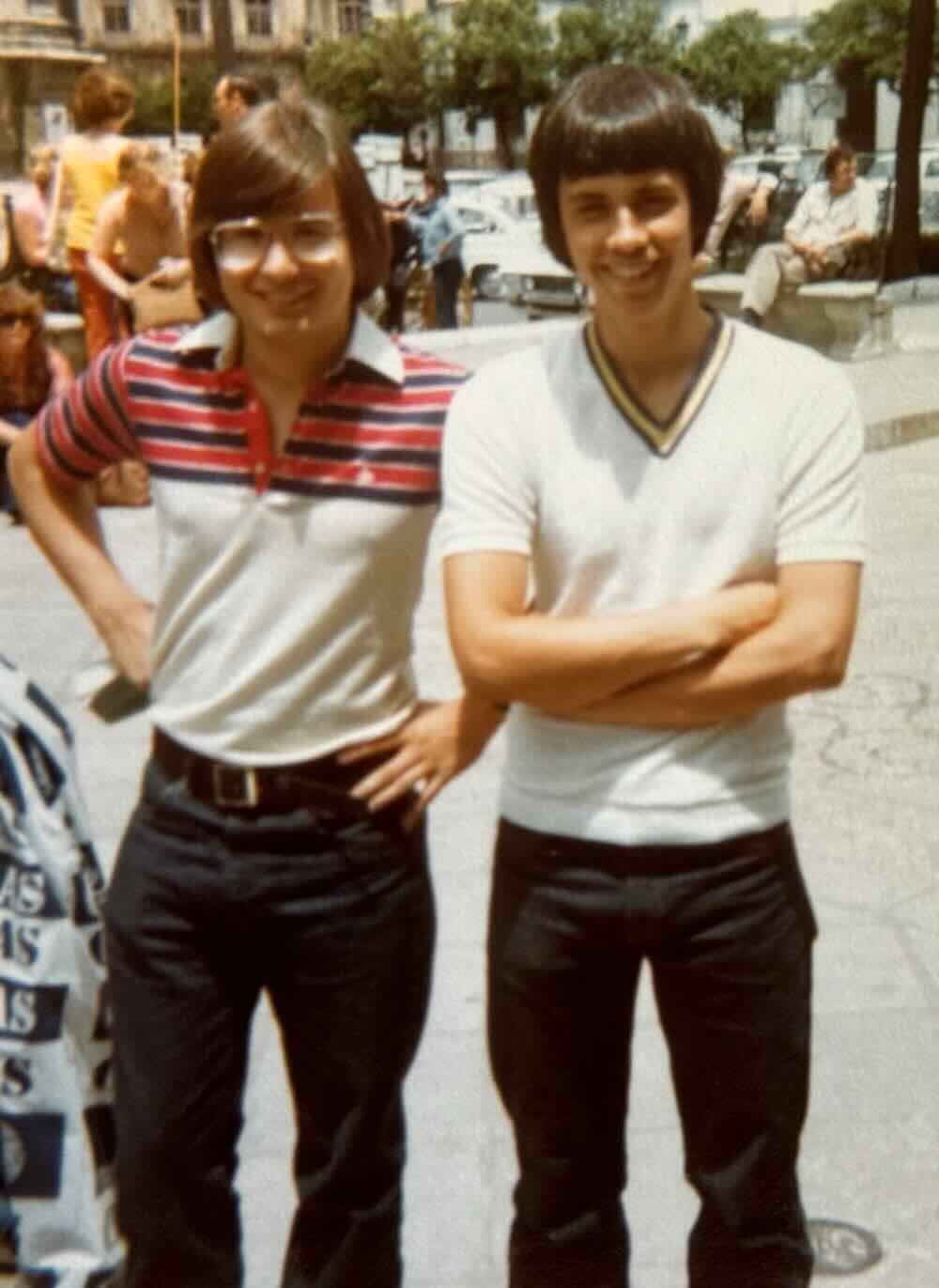
One night we go tapa hopping with the Wisconsin Girls and I get drunk for the first time - on sangria. One of them stays out late with me and we miss the last metro, forcing us to walk miles back to the dorm. Green and black clad Guardia Civil officers track us with their machine guns as we walk. Franco is still dead, but the remnants of fascism live on. We scale a gate to get back into the college campus and fall into the grass. I’m smitten with the girl.
The group on the beach decides we need water. My brother says it would be good practice for me to go buy it. I’ve lost confidence in my speaking ability. The last time I went on my own to do something I failed to buy train tickets. At the window I asked for billetes para Sevilla, and the ticket agent says no hay trenes para Sevilla. I knew it wasn’t true, but I didn’t know how to argue, so I slinked back to my brother and repeated what the agent said. He huffed and went off to buy our tickets.
A circle of perspiration flecked faces looks at me with hope. The girls don’t want to cross the hot sand or wander the garish bodegas of Torremolinos. They don’t want to run the gamut of catcalls muchachas blancas get in 1978 post-Franco Spain. The girl looks at me without speaking; you got us back to the dorm drunk; you got us through Madrid late at night, you’re capable. Soy un duro, I tell myself. I’m even thinking in Spanish! This is my chance to make up for the train fiasco. I want to impress this girl who makes me nervous enough to shake.
I take my yellow Velcro wallet and go, heading toward the resort lined boulevard behind the beach. I’m sure my brother is speculating as to whether I can accomplish this simple task. While crossing the exhaust stinking street I conclude that it doesn’t matter what happens or what he thinks. Small black Seát taxis zoom past. Like stepping in the batter’s box in a baseball game, I stand alone to succeed or fail.
I find a brightly lit store with a red awning over the entrance. It has short rows of snacks, soup, and noodle packets. The checkout counter runs along the front where the clerk stands behind a white metal frame with cigarette packs. I walk to the back and find two-liter bottles of aqua sin gas. The tall plastic bottles have ripples and plastic so thin it feels like it may collapse in my hand. I take two and get in line to check out.
The store is busy. As soon as someone checks out, another person joins the line. The line moves quickly.
This will be easy. I’ll put the bottles on the counter. The man will say how much. (I’m good at numbers!) I’ll hand him the money. Done. Back to the beach.
I put the two bottles on the counter. He says the amount. I hand him the money. He takes the money. He says, Un duro más.
Que? What? More tough? What does that mean?
¡Un duro más por favor!
I look around, sure I’ve handed him the correct amount.
¡Un duro más! ¡Ahora!
A man behind me in line grabs my shoulders. ¡Un duro! ¡Cinco Pesetas! ¡Cinco Pesetas más! ¡Un duro!
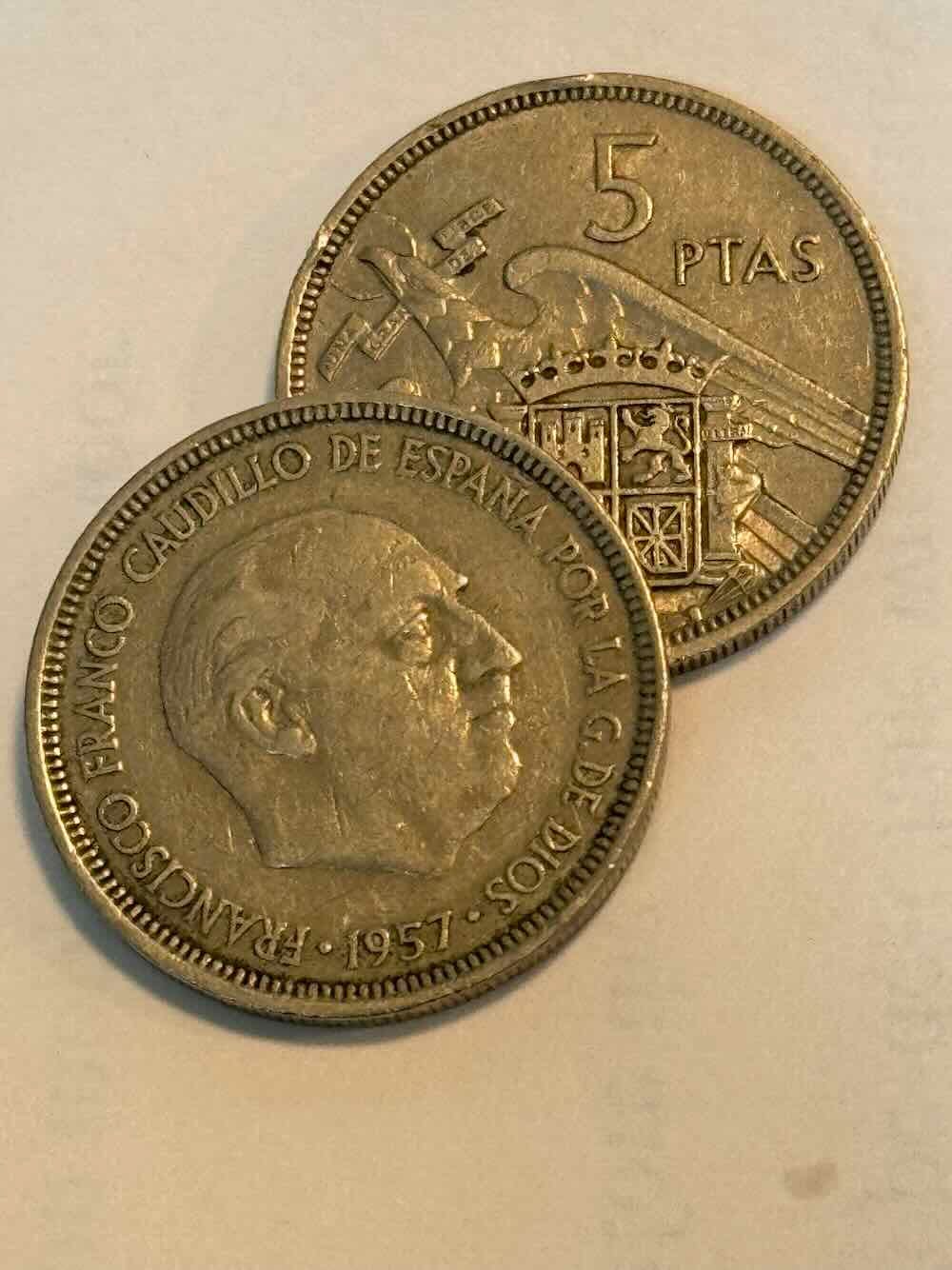
Certain I’d given the man the correct amount, I pull a small coin from my pocket with the still dead Franco’s face on it. The man behind the counter plucks it away. He gestures for me to leave. ¡Rapido! ¡Rapido! ¡Venga! ¡Venga!
Where have you been? the group complains when I return to the beach.
Triumphant, I stick the bottles in the sand and tell the story. A fresh breeze comes in from the Mediterranean Sea. We pass the bottles around.
¡Soy un duro ahora! ¡Un duro más!
Forget baseball. I love travel.
…and yes, she was impressed.
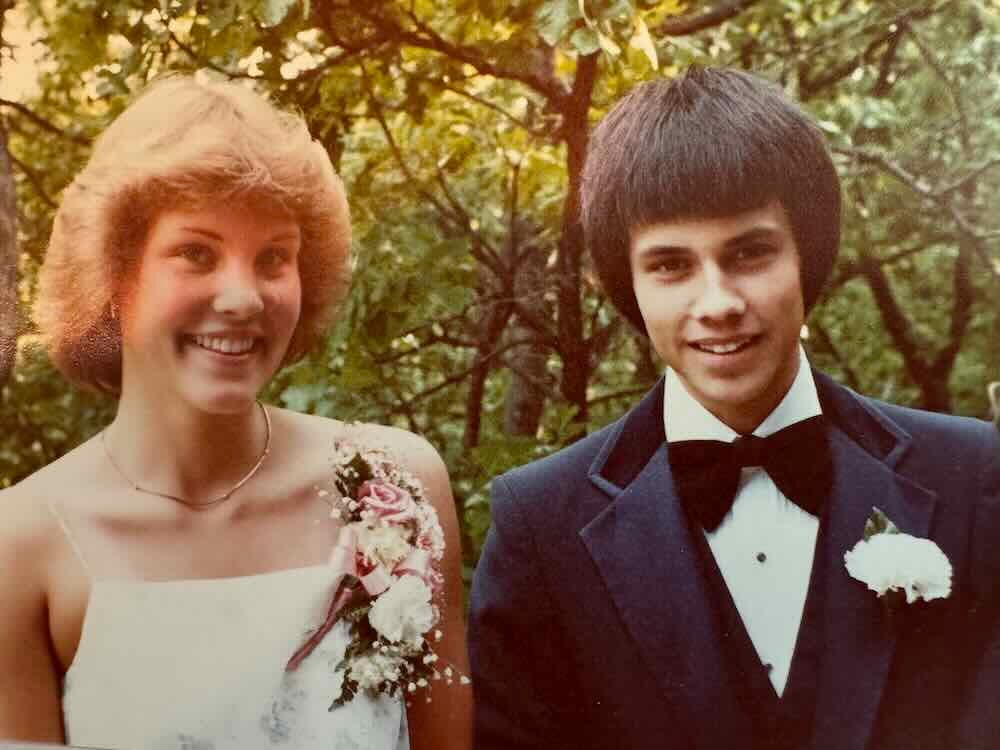
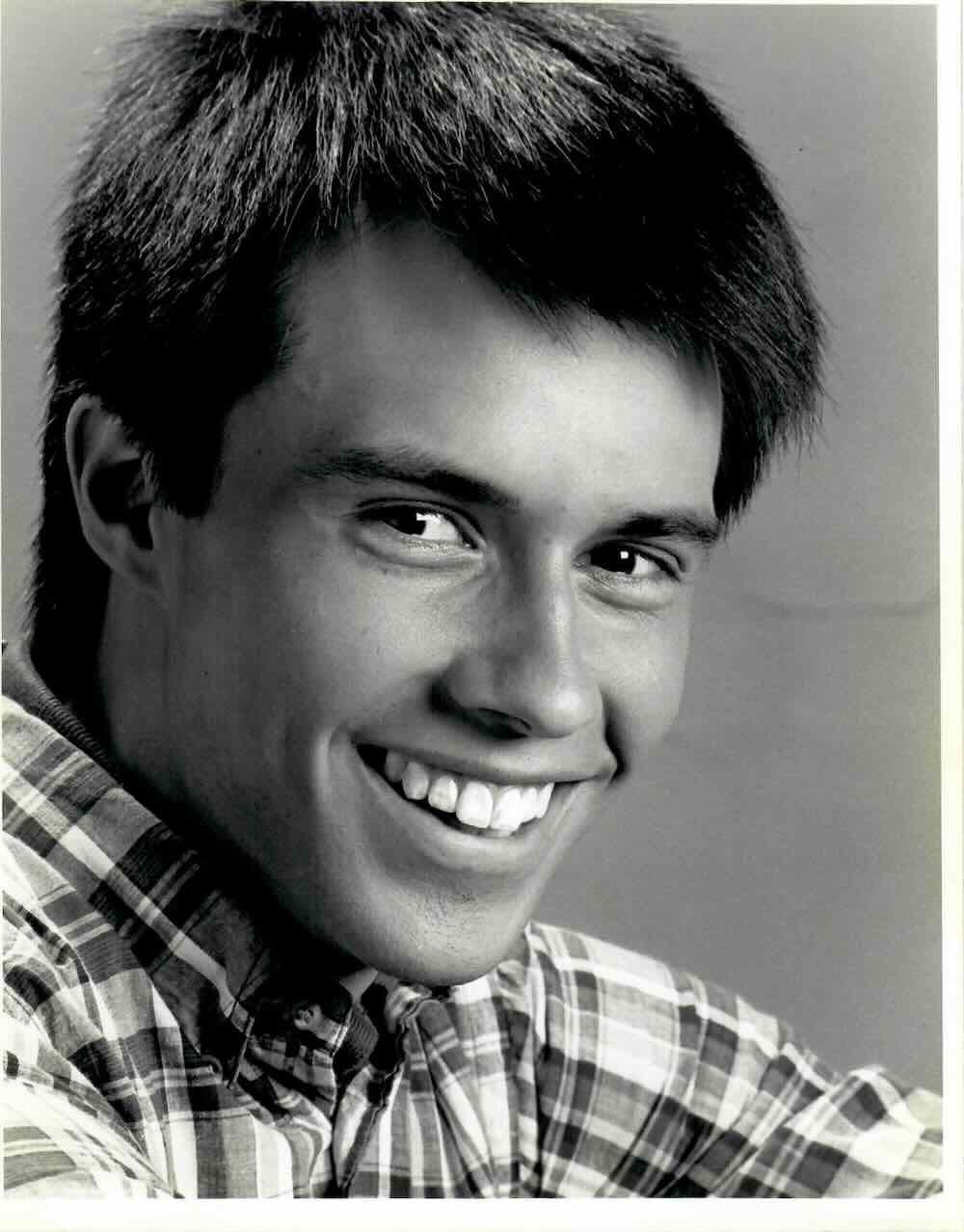
PS: The hair got better, then departed….
Really liked this one, Christopher. And your hair in the photos - looks kinda like you're wearing a batting helmet.